
Therapists do not need a loud website. You need a website that feels grounded, clear, and aligned with the way you work. When the tone is right, visitors feel safer reading, and they are more likely to reach out.
Therapist Website Design
Therapist Website Design Built to Help the Right Clients Reach Out

Our Approach
A Website That Feels Like You
We build therapist websites with a structure designed for both search visibility and conversion, including:
Website Strategy
What a High-Performing Therapist Website Needs to Do
Choosing a therapist is personal, and most clients compare several options before reaching out. Your website should support that decision with clarity, warmth, and a clear next step.

Your website should:
Website Strategy
Why Therapist Websites Underperform
A therapy website can look professional and still struggle to generate consistent inquiries. The most common issues are not about design alone. They are usually about clarity, structure, and how quickly a visitor can feel like you might be the right fit.
Common patterns that limit inquiries include:
Essential Features
Must-Have Features in Every Therapist Website

Calm, Trust-Building Design
A clean, grounded visual style that feels aligned with the space you hold for clients.

Mobile-Responsive and Fast-Loading
A smooth experience on phones, tablets, and desktops, with speed that supports usability and search visibility.

Specialty Pages Built for How Clients Search
Dedicated pages for your primary focus areas so the right clients can find you and feel confident reaching out.

Clear Calls to Action and Simple Next Steps
Contact and scheduling pathways that make it easy to take action without pressure.

Privacy-Aware Contact and Intake Forms
Secure, minimal forms that collect only what you need to begin the conversation.

What to Expect and Getting Started Guidance
Clear explanations that reduce uncertainty and help clients feel prepared for a first session.

AEO-Ready Structure and FAQs
Clear headings, concise answers, and short FAQs on key pages to support answer-style search results in 2026.

Schema Where Appropriate
Structured data added where it fits, such as Organization, Person, and FAQ Page schema, to help search engines better understand your practice and pages.

Testimonials and Trust Signals When Appropriate
Thoughtful use of testimonials, credentials, and approach to care, presented in a respectful way.

Optional Resources and Education
A blog or resources section when it supports your practice goals and helps clients feel informed.

Analytics and Tracking Setup
Google Analytics and Google Search Console setup so performance can be measured and improved over time.
Our Work
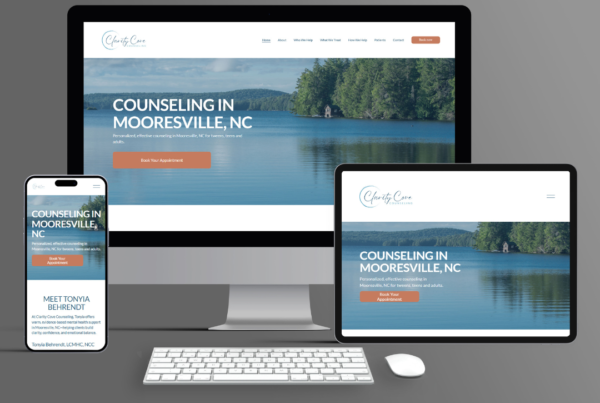
Featured Therapy Website
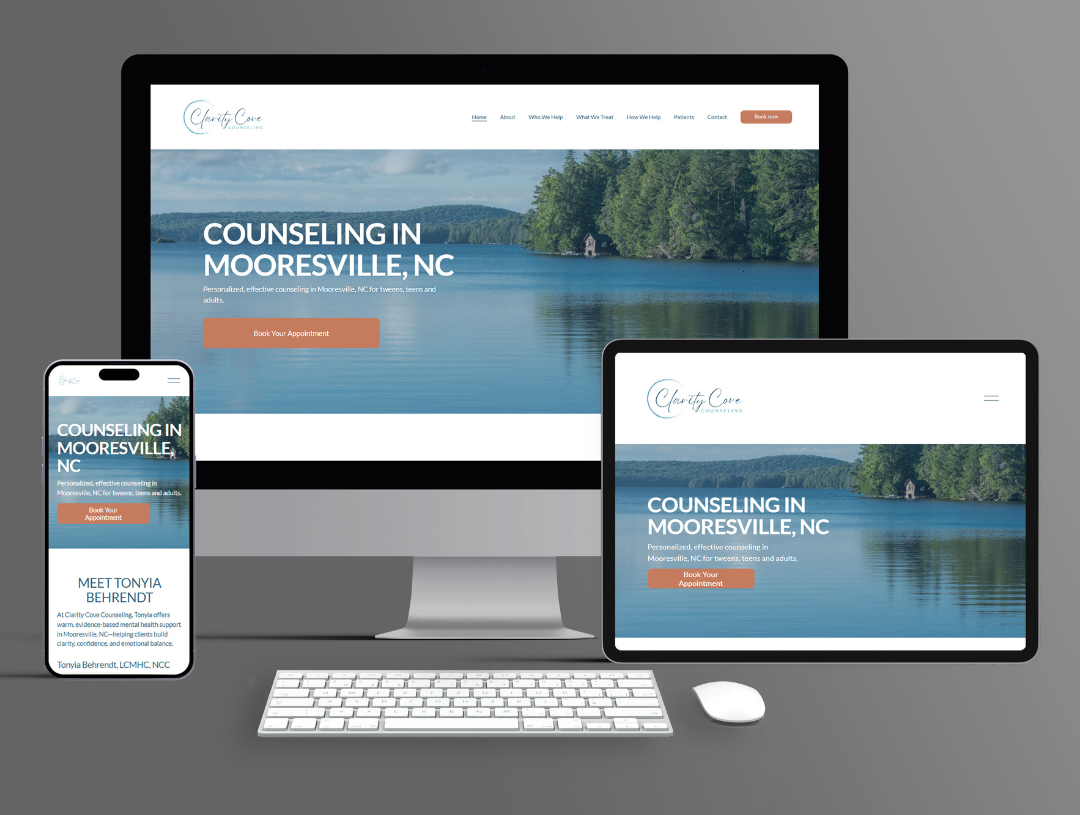
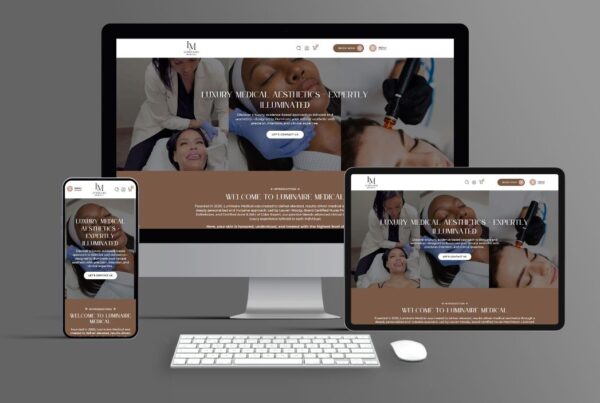
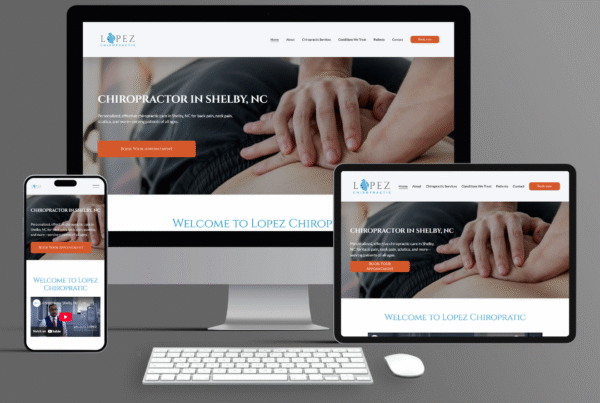
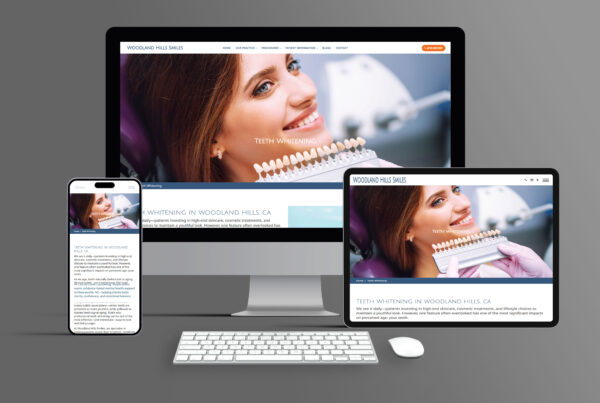
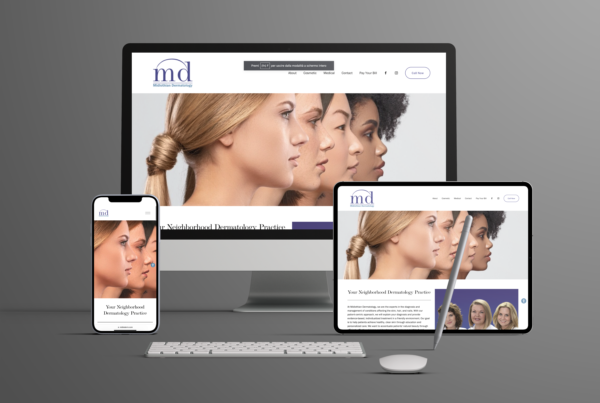
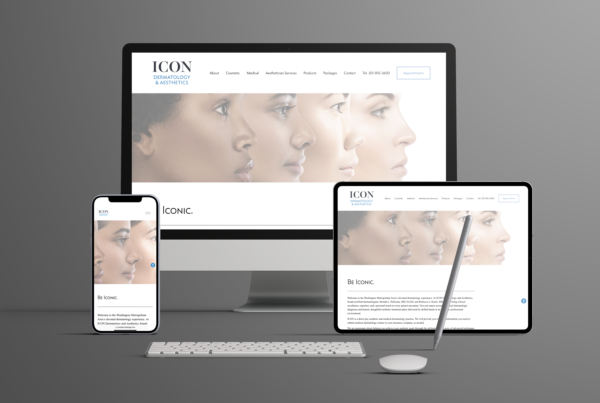
Healthcare website examples that reflect the same approach to structure, performance, and patient experience, tailored to each specialty.


Page Structure
Pages to Include in a Therapist Website
To rank for specialty searches and convert the right clients, a therapist website needs clear structure and calm guidance. These core pages help visitors quickly understand fit, build trust, and take the next step.







SEO & AEO
SEO and AEO Foundations Built Into Therapist Website Design
A calm, beautiful website is not enough if the right clients cannot find you. That is why SEO foundations are part of our therapist website design approach. We build websites with clear structure, client-friendly content organization, and performance best practices so your practice can be found in search and provide a smooth experience for every visitor.
In 2026, visibility is not only about traditional rankings. Clients are also discovering therapists through AI-driven search experiences and answer-style results. We build therapist websites with SEO and AEO foundations so your content can perform across both.

Our SEO and AEO foundations for therapist websites include:
- Website architecture and internal linking across services, specialties, and key client pages
- SEO-ready page structure and metadata for priority specialties and searches
- Mobile performance and speed improvements that support user experience and visibility
- Local SEO alignment, including clear location signals and consistent contact details
- AEO formatting that supports answer-style results, including clear headings, concise explanations, and short FAQs on key pages
- Schema where appropriate to support search engines and richer result types
Schema
Schema Where Appropriate
Schema is structured data added to your website so search engines can better understand your practice, your provider information, and your pages. When implemented correctly, it can support stronger visibility through enhanced listings and clearer context.
For therapist websites, we typically implement schema such as:
- Organization or LocalBusiness for practice identity and contact details
- Person for therapist bio pages when appropriate
- Service for key specialty pages when applicable
- FAQ Page for frequently asked questions formatted for answer-style results
- Web Site and Search Action to support branded search and site understanding
We apply schema selectively and accurately based on your pages and platform, then validate it to ensure it is working as intended.

Our Approach
Founder-Led Strategy and Therapist Website Design
Many web design companies are built for volume. That can mean templates, handoffs, and a website that does not fully reflect who you are as a clinician.
Examples of standard updates that can typically be completed within 48 hours include:
Our Process
Our Therapist Website Design Process

Discovery and Technical Planning
We learn your services, client audience, and goals, then confirm the platform that best fits your needs, WordPress or Squarespace. We also determine the pages your practice needs to support search visibility and client inquiries, including specialty pages, about and contact pages, and other important searches based on how people look for therapy.

Content Planning and SEO Foundations
We plan and develop client-focused, SEO-optimized content that supports both visibility and conversion. This includes specialty page copy written around how clients search. You review the content and provide feedback so everything is accurate, aligned with your voice, and approved before development.

Web Development, Design, and Integrations
After content is approved, we source high-quality stock images or use the photos you provide. We then create Figma mockups for the homepage and your specialty page templates so you can review layout and design direction before anything is built. Once approved, we develop the site in WordPress or Squarespace and complete integrations such as scheduling links, secure forms, and optional email signup when appropriate. Most projects take 2 to 3 months, depending on the number of pages and review timing.

Testing, Launch and Training
We run cross-device and browser testing, confirm performance and functionality, and finalize internal linking across specialty and key site pages to support search visibility and client navigation. You receive a final review link before launch. After launch, we connect or set up Google Analytics and Google Search Console and confirm tracking is working correctly. We then provide training and guidance so you can confidently manage updates moving forward.

Andrea Rodgers
Medical Practice Growth Specialist
About
Meet the Founder
Grace & Grit Marketing is founder-led, and you work directly with Andrea Rodgers. Andrea has been building websites since 2008 and has focused on medical practice marketing since 2010, with deep experience supporting dermatologists, plastic surgeons, and other aesthetic providers.
From 2011 to 2020, she served as Digital Marketing Director for world-renowned dermatologist Dr. Tina Alster, supporting her practice through years of growth until it was sold during the pandemic in 2020. Over the past 16 years, she has also worked closely with physicians and key opinion leaders in aesthetic medicine. That background shows up in the details: clinically credible messaging, patient-friendly education, and page structure built around how patients actually search for care.
Your website is not treated as a standalone design project. It is built as the foundation for ongoing growth, with an architecture that supports SEO, AEO, paid search, reputation management, social media integration, email marketing, and future content expansion.
Clients choose this model because it is direct and accountable. The founder leads strategy and project management, site structure, and messaging from day one, and stays involved throughout the project so the final website is accurate, polished, and built to perform. Many clients stay for years, and we can support as much or as little as makes sense for your practice goals.
Andrea is a Wake Forest University graduate and an Economics and Political Science double major, bringing a disciplined, analytical approach to strategy and execution.

Why Choose Us
Why Therapists Trust Us for Website Design

Deep Experience in Healthcare Website Design
With nearly 20 years of website experience and 16 years focused on healthcare practices, we understand what a therapy website needs to feel trustworthy, load quickly, and support client confidence. We build with technical quality and client experience in mind so your website is stable, maintainable, and ready to grow.

Built for Visibility and Client Inquiries
Strong website design supports speed, mobile usability, and a smooth user experience. We build with SEO and AEO foundations, clear specialty page structure, and conversion pathways so your site can earn visibility in search and guide the right clients toward reaching out.

Integrations That Support Your Workflow
When applicable, we connect your website to scheduling links, contact and intake forms, and other tools that help clients take the next step with less friction.

Ownership and Transparency
Your practice owns the website, hosting, and key marketing accounts. We do not use proprietary platforms, and we build on WordPress or Squarespace so you retain full access and flexibility long-term.

A Process Designed for Busy Clinicians
From planning and content approval to design mockups, development, testing, launch, and training, our process keeps projects moving while giving you clear review points and an end result you can confidently manage.
Testimonials
What Medial Practices Say About Us
Consultation
Request a Therapist Website Design Consultation
A high-performing therapist website should do more than look polished. It should feel calm and credible, support visibility for your specialties, and generate consistent inquiries from the right clients.
After you reach out, we will:
- Review your current website and goals
- Confirm the platform that best fits your practice, WordPress or Squarespace
- Outline a clear page plan, timeline, and next steps
FAQ
Therapist Website Design FAQs
What does therapist website design cost in 2026?
Therapist website design in 2026 typically ranges from $2,500 to $8,000+ depending on the number of pages, content needs, and integrations like secure forms and scheduling. Custom builds with strategy, SEO foundations, and conversion-focused layouts often fall in the mid to upper end of that range. Ongoing maintenance and SEO support, if needed, is commonly a separate monthly cost.
What makes a great therapist website design?
A great therapist website helps visitors feel safe, understood, and clear about the next step. The strongest sites combine calm design, mobile-first performance, simple navigation, clear calls to action, and secure contact pathways. Great therapist websites also include well-structured service pages and helpful content that builds trust without overwhelming the reader.
Why choose a specialized therapist website design agency?
A specialized therapist website design agency understands the trust and privacy needs of mental health clients and builds websites that reflect those standards. That includes secure forms, patient-friendly messaging, and SEO structure for searches like “therapist near me” and specialty terms. General designers often miss the clinical nuance and conversion details that drive qualified inquiries.
What are the must-have features for a therapist website?
A therapist website should include a mobile-responsive design, fast load speed, clear calls to action, and secure contact or intake forms. Most practices also benefit from service or specialty pages, a strong About section, and simple scheduling or next-step guidance. Trust elements like a clear privacy statement and thoughtful, calming visuals are essential.
What are the best therapist website design examples?
The best therapist website examples are clean, calm, and easy to navigate. They typically include clear specialty pages, simple contact pathways, mobile-first layouts, and content that answers common questions without sounding clinical or salesy. Strong examples also prioritize speed, accessibility, and privacy-forward messaging.
How long does it take to design and launch a therapist website?
Most custom therapist websites take about 6 to 12 weeks from kickoff to launch, depending on page count and review timing. Projects typically include discovery and planning, design direction, development, and testing with SEO setup before launch. Clear review checkpoints help keep timelines predictable.
Do therapist websites need to be HIPAA compliant?
A therapist website needs HIPAA-aware workflows when it collects or transmits protected health information. Many practices choose secure forms and privacy-forward processes even when the website is simple, especially if intake details are shared online. Your specific compliance needs depend on what data is collected and which tools are used.
How important is mobile optimization for therapist websites?
Mobile optimization is essential because many people search for therapists from their phone. A mobile-first website loads quickly, keeps navigation simple, and makes it easy to take the next step without friction. Strong mobile performance also supports search visibility.
How can therapist website design improve client inquiries and bookings?
Therapist website design improves bookings by reducing uncertainty and making the next step simple. This includes clear specialty pages, trust-building content, fast load times, and secure contact options. When paired with strong SEO foundations, a website is more likely to attract qualified visitors and convert them into inquiries.
What questions should I ask a therapist website design agency before hiring?
Ask about their experience with therapist and mental health practice websites, how they handle privacy and secure forms, and what their process and timeline look like. Request portfolio examples that match your practice style and ask how they approach SEO structure for specialties and location searches. Also confirm what ongoing support is available after launch.
How do I choose the best therapist website design agency?
Choose an agency that has proven experience with therapy practices and can show relevant website examples. Look for a process that includes strategy, clear messaging, and SEO foundations, not just design. The best fit will be transparent about scope, timelines, and what results are realistic.
What features should a therapist website include for privacy and trust?
A therapist website should include secure contact pathways, a clear privacy statement, and content that explains what to expect in a calm, reassuring way. Anonymous testimonials may be appropriate depending on your practice and ethics guidelines. Professional bios, a clean layout, and simple navigation also contribute to trust.
How can therapist website design help with local visibility?
Therapist website design supports local visibility through clear page structure, location-relevant content, and strong on-page SEO foundations. Many practices also benefit from alignment with Google Business Profile and consistent contact details across the website. Fast mobile performance and clear calls to action help convert local traffic into inquiries.
How does therapist website design support digital marketing?
Your website is the hub for digital marketing. SEO brings qualified visitors, paid ads send traffic to targeted pages, and secure forms capture inquiries. A well-designed site supports tracking and measurement so you can understand what is working and refine over time.